Hillary Clinton’s campaign hosted the first ever hackathon for a presidential candidate Saturday at the Impact Hub San Francisco. “Code for Hillary” brought together top technology talent from around the country to build solutions that will strengthen political engagement in this cycle’s pivotal election.
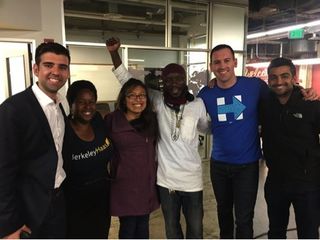 Miami resident and University of Miami graduate David Capelli was part of the winning team for their “Voter Equity App,” an easy to use bilingual mobile app for voters to request on-demand resources trying to get to the polls or while standing in line at the polls with a few clicks.
Joining Capelli were Carla Mays, Founder/CEO of Mays Civic Innovation (Obama ‘08 Campaign Alum & civic innovation advisor) and Rocio Lopez, a dreamer who recently left her job at Cisco to explore founding her own UI/UX Design & Storytelling Firm. The team won tickets to see and meet with Clinton herself on Friday evening at an event in San Francisco. The team hopes to join the campaign’s national tech team to bring diversity and insights on technology, voter engagement and protection.
The app concept hits home in Florida, where long poll lines, hot weather, and voter suppression make voting difficult for many people. This is the first mobile application that builds equity, inclusion and protection for voters in political elections. People of color, low-income communities, the elderly, and disabled now have a tool that empowers them to go to the polls and stay in line during long waits.
The civic tech team hopes to continue develop technology platforms that solve civic problems in communities like Miami, where there are minority-majorities. They are currently developing an all in 1 regional transportation mobile application that focuses on a market more accurately represented than current civic solutions. “Politicians, regardless of their political affiliation, have an opportunity to invest in entrepreneurs to build technology solutions that serve as tools to solve and mitigate problems in their community” shared Capelli. “We encourage leaders in Miami to embrace and invest in their diverse talent to help solve access and equity problems across disciplines,” continued Capelli. “Miami can be the place that gets it right.”