By Nancy Dahlberg / ndahlberg@miamiherald.com
Gary Vaynerchuk tells it like it is.
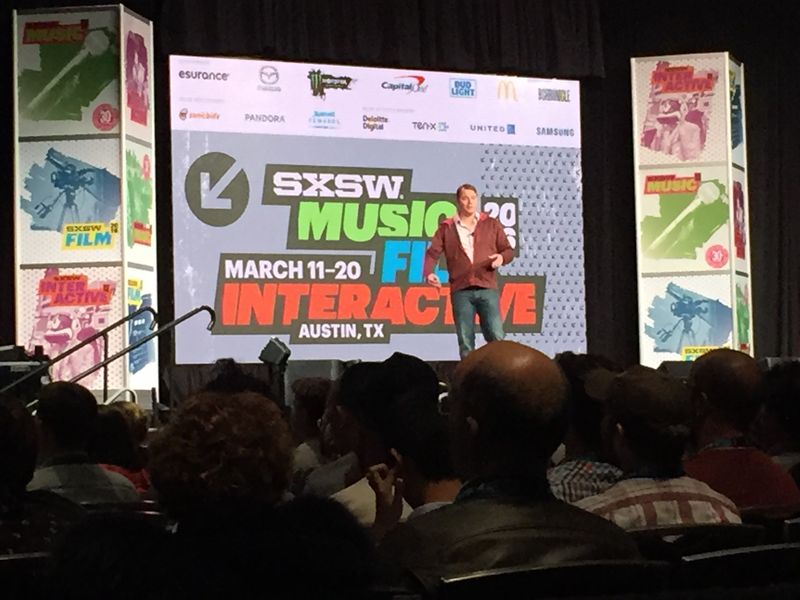
 It didn’t take long for a long line to form when Gary Vaynerchuk of Vayner Media, Wine Library TV and Ask Gary Vee, invited SXSW attendees to ask him anything. He was a keynote speaker at South by SouthWest on opening day in Austin. Here is some of what the marketing guru –- oops, don't call him a guru, he said; the founder of several multi-million businesses prefers practitioner -- dished out to the packed ballroom at the Austin Convention Center:
On company culture: “you can building a billion-dollar business on good. People work better on honey than vinegar.”
On social media networks to watch: Snapchat. It’s really the only place to watch the masses in the moment, he said.
On the hustle: You can’t market your way there. “If you build the best f------ whatever, you win.”
Born or made: The entrepreneurs building billion dollar companies are born, not made. However, hustlers not born with it can still build strong companies. “Hard work is the variable to maximize your success.”
Self-driving cars: How soon?
In 1.4 million miles of driving time, Google’s self-driving cars have seen it all. There was the woman in an electric wheelchair chasing a duck with a broom. Or the group of college students playing “Frogger” in the street. Once, in Austin, a man ran out from his house to greet the car – but he was naked, said Chris Urmson of Google. “Thanks for keeping it weird, Austin.”
It’s no secret traffic is out of control: 6 billion minutes per day are spent commuting in the U.S. Put another way: 162 lifetimes per day in the U.S. are wasted commuting, said Urmson of the Google Self-Driving Car Project.
For this reason as well as safety – 38,000 people were killed on U.S. roads last year -- the technology can’t come soon enough. Imagine being able to use the car to sleep, work or relax and watch a movie. The car will be like a room that moves with you. Imagine the implications for cities if they don’t have to park? Parks instead of parking spaces?
But when? Testing is still on-going and the cars are improving every day. “Today our cars are a little bit paranoid,” he said. “We want to make them more confident.”
Urmson believes the technology will begin hitting the market in waves, starting perhaps as soon as three to five years.