By Laura Haines
 Last weekend Refresh Miami teamed up with Wyncode Academy and Code for Miami to host its first annual Hack-For-Good event, pairing local nonprofits with the top tech talent in Miami to come up with technical solutions to their biggest challenges.
Skyscanner is a global travel search site; we focus on solving the problems that live in travel. With that problem solving experience, we decided to get a team together, and join the Miami tech community to find solutions to local community problems.
The hackathon took place at The LAB Miami, giving participants just 24-hours to build real tools that could help nonprofits make an even bigger impact on the lives of Miami residents.
The Skyscanner hack team comprised of some of the companies top tech talent from our Brickell office; Lance Gobaira, Jonathan Kennedy and Laura Haines.
How the Hackathon worked?
On Friday evening the Skyscanner team gathered at the LAB for an official welcome event, including formal nonprofit presentations that introduced the participating organizations’ problem areas. After just an hour to consult with all nonprofits, each team made their selection based on where they felt they could make the most impact.
The hackathon began at 8.30 am on Saturday and teams had a 24-hour window to code. Following that 24-hour period the judging began. Judging consisted of two rounds: first round judged by the nonprofits themselves, who meet with each team working on a challenge for their organization, the top team selected by each nonprofit proceed to the final round to be judged on a technical level.
What was the problem?
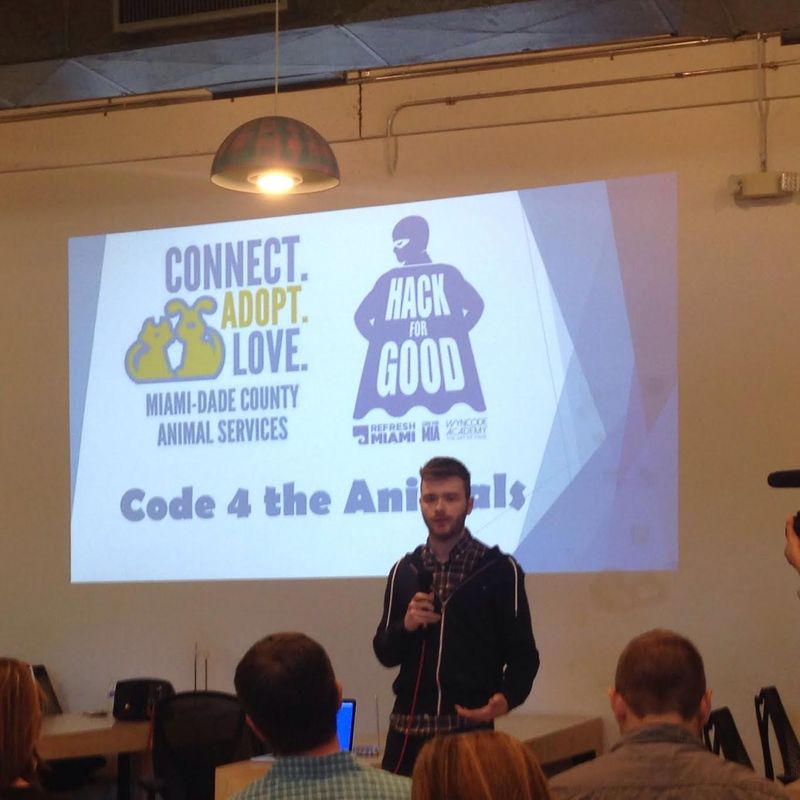
The Skyscanner Team chose Miami-Dade Animal Services as the local nonprofit they wanted to Hack for Good. Miami-Dade Animal Services receives about 30,000 cats and dogs every year and they need to maintain or exceed our 90% save rate. Lack of awareness, a constant barrage of negative cyberbullying on social media (which fuels negative perceptions of the shelter) and limited resource all contribute to driving people away from the chance to save a pet’s life.
What was our approach?
At Skyscanner we follow an internet economy mindset, which encourages us to ‘start with the why’. With this question always at the center of our approach, we were able to ensure that we understood the core problem that the Miami Dade Animal Services were facing, and then review all potential solutions. Through an intense round of brainstorming, we uncovered a variety of avenues that would improve awareness of the shelter, automate tasks to reduce the resource constraints they face and improve the experience on the shelter website. All great options but we only had 24 hours!
To make the most impact, we had to address their biggest problem. We realized that by addressing the negative commentary on social media, there would also be a positive impact of the save rate, people resource and awareness of the great work being done by Miami-Dade Animal Services.
What was the solution?
The Skyscanner team built a service that connects to Facebook to find posts, comments or events relating to the Shelter, passes them to a questioning answering system called IBM Watson. IBM Watson was able to provide sentiment analysis, so that we could then determine which negative elements were important enough to alert the Animal Services team about, through a communications application on the computer or cell phone.
The social media sentiment analysis allows for quick action on negative messages, reducing the impact on the Shelters reputation and automates social media monitoring, reducing the resource overhead. The tool is Open Source and most importantly its impactful and free to implement.
Biggest Challenges
Hackathons always bring the challenge of time, forfeiting sleep in order to race against the clock. In a very short period of time you need to decide on a quick plan of action, determine your MVP (minimal viable product – the smallest thing you can create that will provide value – in an ideal world you would build everything and not have to pick one thing to focus on), test what you have built and ensure its usable.
Thankfully one thing that wasn’t a challenge was our ability to work well together in an intensive environment. At Skyscanner we work in squads – mini start-ups with objectives and key results – and our cohesive approach to the Hackathon proved to be something of note as the organizers of the event commented on our team work and efficient approach to the tasks at hand.
What was the outcome?
All teams were judged against criteria such as:
- How well the project solves issues the organization presented
- How technically challenging the project was to complete
- Innovation
- User friendliness
- Completeness
- Learning curve for the team
- Social impact
- Overall appeal
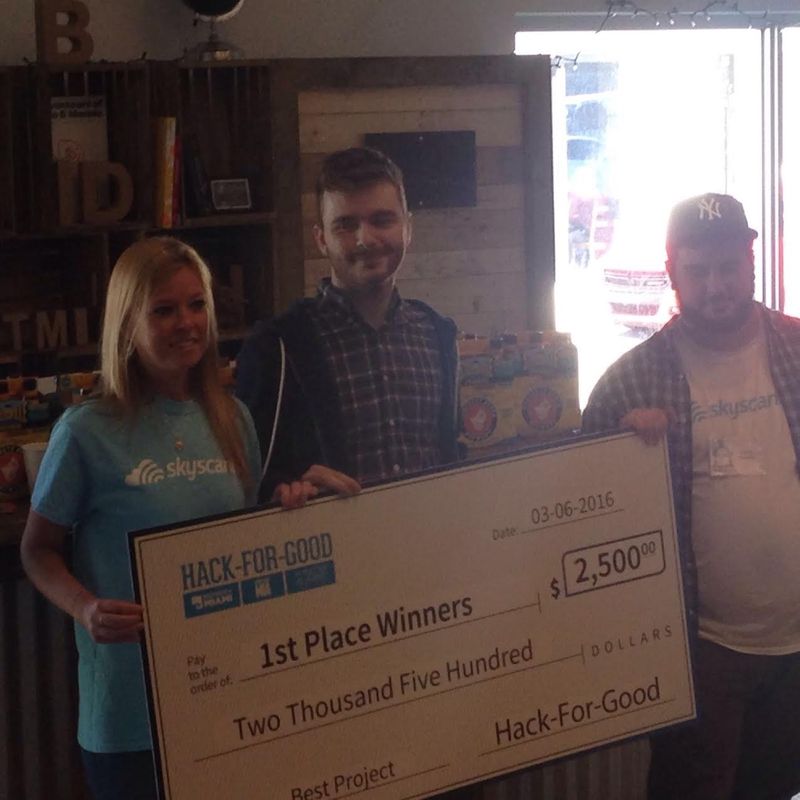
At 1 p.m. on Sunday we were thrilled when the Skyscanner team was announced as the winner! Miami-Dade Animal Services will be presenting the social media sentiment analysis tool to their board of directors with the aim of implementation.