When real estate and tech leaders come together to talk about “Miami’s tech footprint,” don’t expect everyone to be in lock-step. But perhaps they all can agree on this: With so much development slated for the Park West section of downtown Miami — including Miami Worldcenter, All Aboard Florida and the Miami Innovation District — tech needs to be in the conversation. And it was.
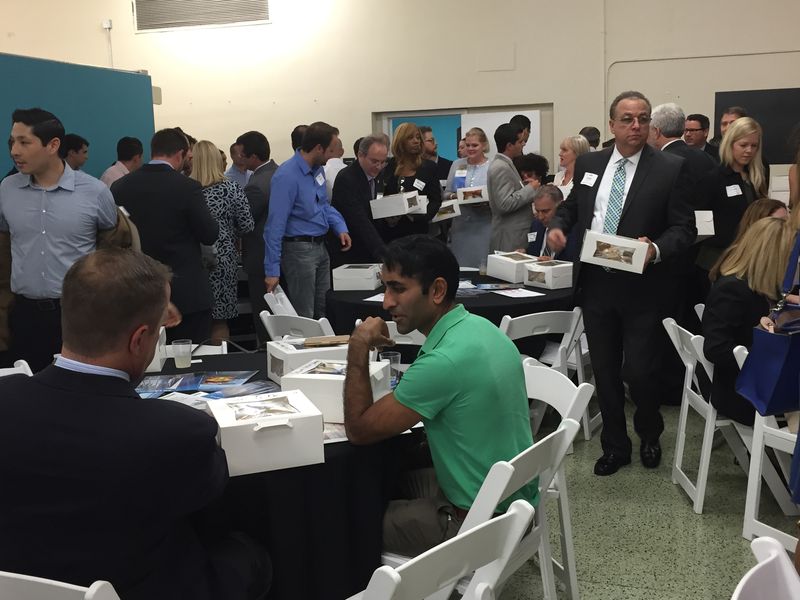
An audience of mostly business leaders and real estate professionals packed Venture Hive for a lunch-and-learn event on Thursday hosted by Commercial Industrial Association of South Florida.
They heard pitches from two local South Florida companies incubating at the Hive — Referrizer and Snow Lizard — and a keynote speech by Michael Rodriguez, CEO of eMerge Americas. “We are in the middle of the biggest change we have ever seen in our lives,” said Rodriguez, adding while other cities are constrained in their growth, “Miami is expanding at a time when technology is expanding — it’s a perfect fit.”
Ken Krasnow of CBRE in South Florida tried to put it in perspective for the audience. The 20 top tech-oriented office markets in the country created jobs five times faster than the national average between 2009 and 2013, CBRE found in its study. In South Florida last year, 370,000 square feet of new leases and expansions were in the tech sector, more than twice what it was in 2013, while the total in all industries was essentially flat, he said.
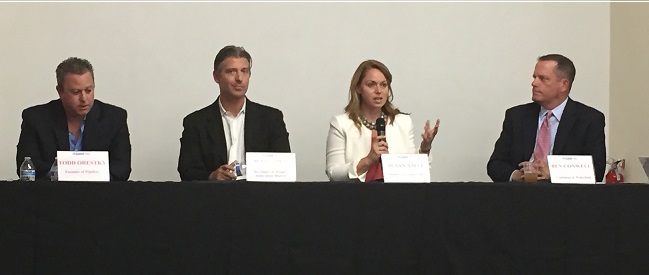
“Tech is touching every company now,” said Todd Oretsky, co-founder of Pipeline Workspaces. Locally, Watsco Ventures is doing a great job of investing in and bringing tech into a traditional industry, he said. How do you build a culture to create the big wins? You need a cluster and it takes a little time, he said.
There is incredible talent here, but our challenge is to create long-term businesses that have a heavy IP component to them, said Susan Amat, founder of Venture Hive, which is in talks with 12 cities about being a soft landing place for their startups. She also said Venture Hive is starting young, teaching kids business, design thinking, coding and software, including at camps at five city of Miami parks for lower-income students. “This is part of the long-term strategy to create innovation in South Florida. It’s not a physical place, it is a state of mind,” Amat said. “How do we stop the fluff and build great companies?”
Michael Simkins, developer of the proposed Miami Innovation District, said there are a lot of components to a tech ecosystem, and all are needed, but retaining and attracting the medium to large tech companies is the most important for Miami now because that provides the most jobs. He also said affordable micro-apartments, 250-350 square feet, are a key component: “I see it all coming together,” he said at the event Thursday. Though on the same day, the Miami City Commission [dealt the project a blow](An%20audience of mostly business leaders and real estate professionals packed Venture Hive for a lunch-and-learn conversation hosted by Commercial Industrial Association of South Florida. They heard pitches from two local South Florida companies incubating at the Hive — Referrizer and Snow Lizard — and a keynote speech by Michael Rodriguez, CEO of eMerge Americas. “We are in the middle of the biggest change we have ever seen in our lives,” said Rodriguez, adding while other cities are constrained in their growth, “Miami is expanding at a time when technology is expanding — it’s a perfect fit.” Ken Krasnow of CBRE in South Florida tried to put it in perspective for the audience. The 20 top tech-oriented office markets in the country created jobs five times faster than the national average between 2009 and 2013, CBRE found in its study. In South Florida last year, 370,000 square feet of new leases and expansions were in the tech sector, more than twice what it was in 2013, while the total in all industries was essentially flat, he said. “Tech is touching every company now,” said Todd Oretsky, co-founder of Pipeline Workspaces. Locally, Watsco Ventures is doing a great job of investing in and bringing tech into a traditional industry. How do you build a culture to create the big wins? You need a cluster and it takes a little time, he said. There is incredible talent here, but our challenge is to create long-term businesses that have a heavy IP component to them, said Susan Amat, founder of Venture Hive, which is in talks with 12 cities about being a soft landing place for their startups. She also said Venture Hive is starting young, teaching kids business, design thinking, coding and software, including at camps at five city of Miami parks for lower-income students. “This is part of the long-term strategy to create innovation in South Florida. It’s not a physical place, it is a state of mind,” Amat said. “How do we stop the fluff and build great companies?” Michael Simkins, developer of the proposed Miami Innovation District, said there are a lot of components to a tech ecosystem, and all are needed, but retaining and attracting the medium to large tech companies is the most important for Miami now because that provides the most jobs. He also said affordable micro-apartments, 250-350 square feet, are a key component: “I see it all coming together,” he said. Though the Miami city commission dealt the project a blow on the same day.) in the first of two planned votes.