My Business Monday centerpiece story
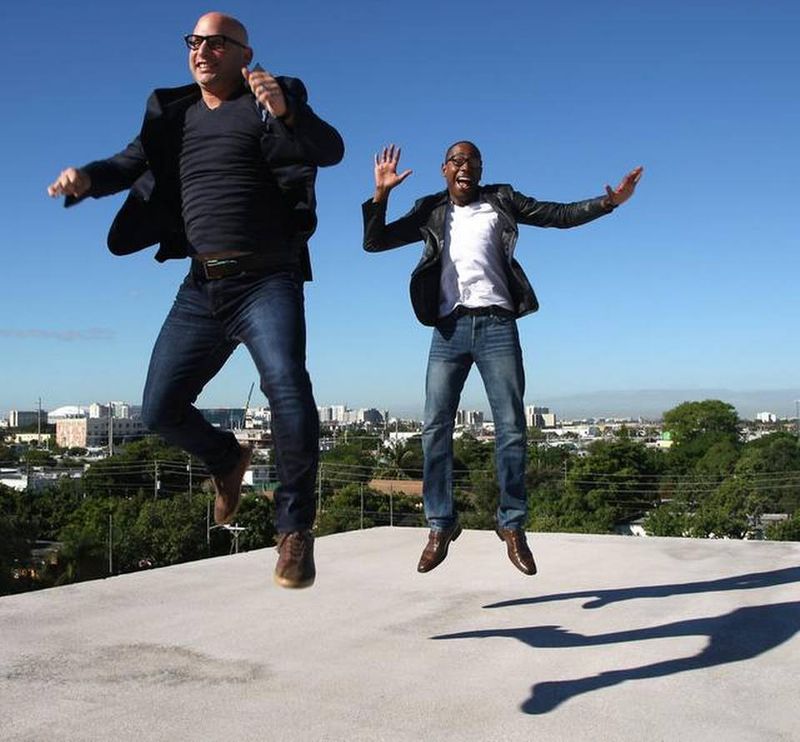
Photo by Carl Juste / Miami Herald
Miami-based Urban.Us invests in technology startups that could impact the future of cities and organizes an annual conference in Wynwood.
By Nancy Dahlberg / ndahlberg@miamiherald.com
“Pop-up mass transit” that can be directed by the riders themselves. Services that not only find you a parking space but valet your car — wherever you are. Smart energy solutions that control heating and cooling based on when you are in the room or turn on the sprinklers only if Mother Nature isn’t cooperating.
These are examples of “urban tech” solutions aimed at simultaneously making it easier to live in cities and helping to reduce the carbon footprint. They join other solutions that have grown in popularity in the past couple of years: ride-, bike- and room-sharing, delivery services, and crowd-sourced information portals — all of which can be easily accessed with your smartphone.
The big idea: Reimagine the way things have been done for decades and come up with ways to make urban living more efficient, more convenient, and often cleaner and greener. Increasingly, it’s the small, nimble startups that hop on the opportunity.
“It is about the opportunity,” said Stonly Baptiste, co-founder of Urban.Us, a Miami startup born to serve this trend. “There are always going to be problems in cities, and we are going to continue to see interesting startups that are solving these problems.”
Baptiste, who has co-founded or helped run a number of tech companies, and fellow Urban.Us co-founder Shaun Abrahamson, (pictured above) an investor in early-stage companies, are among the early adopters trying to power the success of these startups. Urban.Us, a public benefit corporation that funds startups that help cities, has been growing a network of 300 advisors to help those startups and to identify new companies and trends. Urban.Us also convenes an annual conference in April, bringing to Wynwood some of the best urban tech entrepreneurs from around the world.
Some of these urban tech startups use the “sharing economy,” which allows people to take advantage of underutilized assets, like a spare bedroom or time in their schedule to drive. Uber and Lyft, both ride services that entered South Florida — in violation of local regulations — this summer, are perhaps the most visible of this new breed of technology and in hundreds of cities around the globe.
Other urban tech startups, such as Nest, are based on technology helping you to make your spaces — home, work, car — safer, as well as cleaner and greener. Still others, like Waze for traffic, use the crowd or social media to help you navigate the urban jungle.
Fueling this trend is this global urban reality: More than half the world now lives in cities, and in 30 years, 70 percent will live in cities, Abrahamson said. Large cities now consume two-thirds of the world’s energy and create over 70 percent of global CO2 emissions. In the United States, 80 percent of residents already live in cities, stretching resources. And with urban renaissances taking place in the heart of many cities, downtown neighborhoods are experiencing unprecedented growth.
You don’t have to look far to see this trend playing out: The population of downtown Miami — Brickell through Wynwood — has doubled since 2000, to a projected 80,750 residents in 2014. Forty-six percent of those residents are young professionals, ages 25 to 44, according to the Miami Downtown Development Authority’s just-released 2014 Demographics Report. During the day, 222,000 people inhabit Miami’s urban core.
And the growth is not expected to let up. The Miami DDA report projects a population of nearly 100,000 in five years. Fueling that projection: There are about 23,000 condo units currently in the pipeline in the greater downtown region, according to the DDA. Since 2000, more than 22,000 condo units have come online in downtown Miami.
Fort Lauderdale is also experiencing an urban living surge, with 23 condo towers now in some stage of development, according to CraneSpotter’s research. Locally and around the globe, cities struggle with how to handle the surge — from infrastructure to energy to transit to safety. Some governments are actively involved in addressing these issues. But increasingly, it is private businesses, particularly startups, that are creating solutions to ease conditions or potentially change habits.
“If cities don’t change dramatically in the next 30 years, then we have to rethink society. Mayors and people in the cities are ultimately going to decide what will happen with climate change. Who solves this? I don’t think it is fair to ask local governments to do this,” said Abrahamson, in an interview in Urban.Us’ Wynwood office.